Reading, MA · Middlesex County
Basement Water Removal in Reading, MABasement Moisture Inspection & Emergency Basement Flooding
Basement Water Removal in Reading covers basement water pump out, basement wall drying and basement dehumidification after a flood.
Answered 24/7
Local Basement Water Removal Services for Reading
A wet basement gets worse every hour the water stays. In Reading, water on a basement floor wicks up drywall, soaks carpet pad and seeps into the concrete, and cool below-grade air keeps it from drying on its own.
Homes in Reading and nearby Wakefield, Stoneham and North Reading with basements face storm seepage, sewer backups and plumbing leaks. Help with basement water removal covers pump-out, wall and floor drying and dehumidification.
The Basement Water Removal Process in Reading
Basement Moisture Inspection
Moisture meters and thermal cameras check walls, floors and the slab for water that is not visible, including behind finished walls.
Emergency Basement Flooding
Emergency response starts with making power safe, stopping the source if possible and pumping out the water.
Basement Wall Drying
Concrete and block walls dry with directed airflow and dehumidification, which pull water out of the masonry.
Basement Water Pump Out
Pumping starts once power to the basement is safe. Deep water goes first, then extractors handle the thin layer left on the floor.
Basement Floor Water Damage
Flooring that buckled or swelled is removed. Tile and sealed concrete can often be cleaned and dried in place.
Indicators You Need Professional Water Removal
Soggy or Wet Carpeting
Carpet that feels damp or smells sour is holding water in the pad against the concrete.
Wet or Damp Basement Walls
Basement walls that look dark, feel damp or show tide lines are taking on or holding water.
Warped or Buckling Flooring
Flooring that buckles, lifts or feels spongy has water trapped between it and the slab.
Sump Pump Failure or Overflow
A sump pit that is full, overflowing or has a pump that will not start means water is about to spread.
How Basement Water Removal Works in Reading
Step 1: Source Control and Water Pump Out
The leak is shut off and standing water is pumped out, starting at the lowest point.
Step 2: Water Extraction
Extractors pull water from carpet, pad and concrete, and wet vacs clear corners and stairs.
Step 3: Dehumidification and Drying
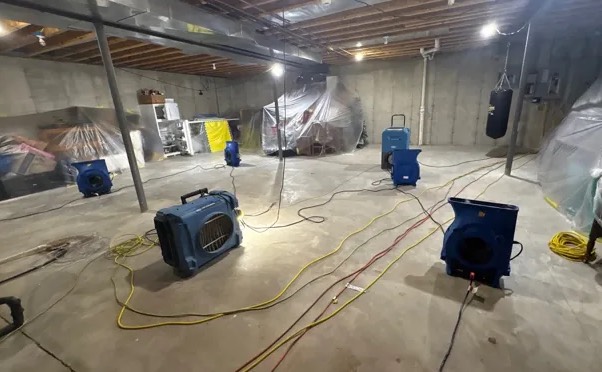
Large dehumidifiers and air movers dry walls, framing and slab over several days.
Step 4: Inspection and Clearance for Repair
Final readings confirm the basement is dry and ready for drywall and flooring repairs.
Common Causes of Basement Water Damage in Reading
Foundation Cracks and Seepage
Cracks in foundation walls and the slab let groundwater seep in during wet weather.
Window Well Leaks and Drainage
Window wells without drains or covers fill with rain and leak through the windows.
Sewer Line Backups and Blockages
A blocked sewer line can push wastewater up through basement floor drains and toilets.
Heavy Rainfall and Storm Flooding
Heavy rain saturates the soil and pushes water through walls, cracks and the floor joint.
Basement Water Removal for Homes and Businesses
Residential Basement Water Removal
In homes, a wet basement often means damaged carpet, drywall and stored belongings, plus a furnace or water heater sitting in water. Water is pumped out and the space dried.
Commercial Basement Water Removal
In commercial buildings, basements often house mechanical rooms and storage. Water is removed quickly so systems can be checked and restarted safely.
Why DIY Basement Water Removal Often Fails in Reading
Water that came up through a floor drain may be sewage. Avoid touching it, keep children and pets away and call local basement water removal pros for cleanup with protective gear and disinfection.
What Influences the Price of Basement Water Removal
A basement pumped out the same day in Reading usually needs less drywall and flooring replaced than one left wet for days.
Contamination Level
Sewage or dirty water needs protective gear, removal and disinfection, which costs more.
Affected Materials
Finished walls, carpet and laminate take more removal work than bare concrete.
Water Depth and Volume
Deeper water takes more pumping time and usually means more materials got wet.
Does Insurance Cover Basement Water Removal?
Flooding from outside water usually needs separate flood insurance. Water from a broken pipe or appliance inside is more often covered.
The Value of Professional Basement Water Removal
Detailed Damage Documentation
Photos, readings and drying logs are kept to support your insurance claim.
Post-Service Moisture Verification
Final readings are recorded before equipment leaves, so you know the basement is dry.
24/7 Emergency Response
Help is available day or night when water is rising in the basement.
Emergency Basement Water Removal Available 24/7
Storm night, weekend or holiday, local basement water removal pros handle basement water in Reading. Call (857) 367-8060 to get pumps running and drying started.
Call Now (857) 367-8060Basement Water Removal Serving Reading and Surroundings
Besides Reading, the pros handle basement pump-outs, wall drying and dehumidification in nearby Wakefield, Stoneham and North Reading.
- Basement Water Removal in Wakefield
- Basement Water Removal in Stoneham
- Basement Water Removal in North Reading
- Basement Water Removal in Wilmington
- Basement Water Removal in Woburn
- Basement Water Removal in Burlington
- Basement Water Removal in Melrose
- Basement Water Removal in Winchester
- Emergency Damage Restoration in 01867
- Storm Damage Restoration in 01867
- Water Damage Restoration in 01867
- Water Extraction Service in 01867
- Water Leak Detection in 01867
- Water Removal Service in 01867
Answers to Top Basement Water Removal Queries
Can wet drywall in a basement be saved?
Sometimes, if the water was clean and removed quickly. Soaked or contaminated drywall is cut out above the water line.
Why is fast water removal so important for basements?
Basements dry slowly, so every hour of standing water adds drying days and more materials to replace.
What equipment is used for basement water extraction?
Submersible pumps, extractors, wet vacs, air movers, large dehumidifiers and moisture meters to confirm drying.
What is the difference between a pump out and extraction?
A pump out removes deep standing water. Extraction pulls the remaining water from carpet, pad and floors.
What happens during basement moisture control?
Dehumidifiers and air movers keep humidity low while materials dry, and readings confirm when the space is normal.