Cambridge, MA · Middlesex County
Basement Water Damage Restoration in Cambridge, MABasement Mold Prevention & Basement Floor Water Removal
Basement Water Damage Restoration in Cambridge includes emergency basement flood cleanup, basement sewer backup cleanup and basement wall drying.
Answered 24/7
Basement Water Damage Restoration Solutions in Cambridge, Massachusetts
A basement dries slower than any other part of a house. The air is cool, there is little sunlight and the concrete holds moisture for a long time. In Cambridge, that makes fast extraction and steady dehumidification important.
Homes in Cambridge and nearby Somerville, Brookline and Medford with basements deal with seepage, plumbing leaks and sewer backups. Help with basement water damage restoration covers pumping, removal of wet materials and drying of walls and concrete.
Complete Basement Water Damage Restoration for Cambridge
Basement Mold Prevention
Fast extraction and drying are the main ways to limit microbial growth in a basement. Surfaces that stayed wet can be treated once dry.
Basement Floor Water Removal
A slab can look dry on top while still holding water. Moisture readings show when it is ready for new flooring.
Basement Sewer Backup Cleanup
Porous materials touched by sewage, such as carpet, pad and lower drywall, are removed. Concrete and framing are cleaned and disinfected.
Basement Dehumidification
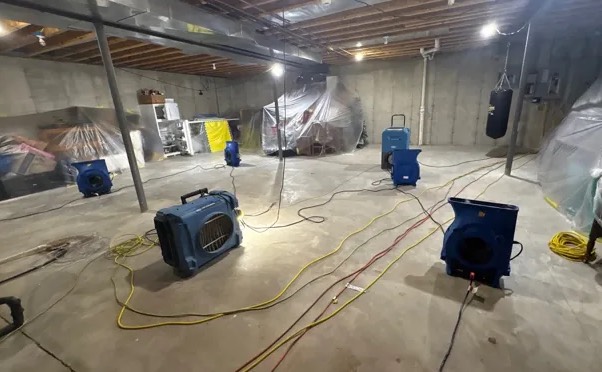
Large dehumidifiers pull moisture from the basement air so walls, framing and the slab can release their water.
Basement Water Extraction
Submersible pumps remove deep standing water, then portable extractors pull water from carpet, pad and the concrete floor.
Warning Signs You Need Basement Water Damage Restoration
Sewage Odors or Backups
Sewage smells or water coming up through a floor drain mean the sewer line is backing up.
Damp or Musty Odors
A damp, earthy or musty smell in the basement often means hidden moisture in walls, carpet or the slab.
Rusted Appliances or Pipes
Rust on the water heater, furnace base or pipes points to repeated moisture or past flooding.
Mold on Surfaces
Dark spots on drywall, framing or stored boxes mean the area has stayed wet for days.
How Basement Water Damage Restoration Works in Cambridge
Step 1: Floodwater Pump-Out
Submersible pumps remove deep water, and electrical hazards are checked before anyone walks in it.
Step 2: Deep Moisture Extraction
Extractors pull water from carpet, pad and the concrete floor after the deep water is gone.
Step 3: Air Circulation and Drying
Air movers keep dry air moving across walls and floors throughout the basement.
Step 4: Dehumidification and Verification
Dehumidifiers run until humidity and material readings confirm the basement is dry.
Common Causes of Water Damage in Cambridge
High Water Table and Hydrostatic Pressure
A high water table pushes groundwater up through the slab and into the joints between wall and floor.
Water Heater or Appliance Leaks
Water heaters, washers and utility sinks in the basement can leak or fail without warning.
Faulty Basement Waterproofing
Old or failed waterproofing on foundation walls lets water through during wet weather.
Window Well Flooding
Window wells without drains or covers fill with rain and leak through basement windows.
Both Residential & Commercial Basement Water Damage Restoration in Cambridge
Residential Basement Water Damage Restoration
In homes, a flooded basement often means damaged carpet, drywall, a furnace or water heater and stored belongings. Water is pumped out, contents are moved and the space is dried.
Commercial Basement Water Damage Restoration
In commercial buildings, basements hold mechanical rooms, storage and sometimes offices. Water is removed and equipment areas are dried so systems can be checked and restarted.
Basement Water Damage Restoration vs. DIY: When to Call the Pros
Do not walk into standing basement water if outlets, cords or appliances are submerged. Shut off power at the panel if you can reach it safely, then call (857) 367-8060.
Understanding Basement Water Damage Restoration Pricing in Cambridge
Waterproofing or sump pump replacement is a separate cost from water removal and drying. In Cambridge, both may be needed to prevent a repeat.
Water Category
Clean water costs less to handle than sewage, which needs protective gear, removal and disinfection.
Material Saturation
Finished basements with carpet, drywall and insulation take more removal work than bare concrete.
Drying Time Required
Basements dry slowly, and longer drying means more equipment days and monitoring visits.
Does Insurance Cover Basement Water Damage Restoration?
Coverage for basement water damage restoration depends on where the water came from and your policy terms. The pros document the damage, and your insurer decides what is covered.
Reasons to Hire Local Pros for Basement Water Damage Restoration in Cambridge
Mold Prevention Focus
Fast drying is the main way to limit microbial growth in a below-grade space.
24/7 Emergency Response
Help is available day or night when water is rising in the basement.
Industrial-Grade Equipment
Pumps, extractors and large dehumidifiers remove water much faster than household wet vacs and fans.
Round-the-Clock Emergency Basement Water Damage Restoration in Cambridge
Sewage coming up through a floor drain? Stop using water in the house and call (857) 367-8060 now for basement water damage restoration in Cambridge.
Call Now (857) 367-8060Basement Water Damage Restoration Serving Cambridge, Somerville, Brookline and Medford
Besides Cambridge, local restoration pros handle basement pumping, drying and dehumidification in nearby Somerville, Brookline and Medford.
- Basement Water Damage Restoration in Somerville
- Basement Water Damage Restoration in Brookline
- Basement Water Damage Restoration in Medford
- Basement Water Damage Restoration in Chelsea
- Basement Water Damage Restoration in Everett
- Basement Water Damage Restoration in Watertown
- Basement Water Damage Restoration in Belmont
- Basement Water Damage Restoration in Arlington
- Emergency Damage Restoration in 02138
- Storm Damage Restoration in 02138
- Water Damage Restoration in 02138
- Water Extraction Service in 02138
- Water Leak Detection in 02138
- Water Removal Service in 02138
- Emergency Damage Restoration in 02139
- Storm Damage Restoration in 02139
Basement Water Damage Restoration FAQs
What equipment is used for below-grade water damage repair?
Submersible pumps, extractors, air movers, large dehumidifiers, moisture meters and air scrubbers for dust and odor.
What health risks come with delayed basement flood cleanup?
Standing water and wet materials can support bacteria and microbial growth, and sewage carries contaminants that need disinfection.
How long does below-grade drying take after a flood?
Often several days or longer, since concrete and cool basement air dry slowly. Daily readings show progress.
What causes the most common below-grade leaks in homes?
Sump pump failures, foundation cracks, clogged drain tile, sewer backups and burst pipes in the basement ceiling.
What is the priority during emergency basement flood cleanup?
Safety first, especially electrical hazards, then stopping the source and pumping out the water as quickly as possible.